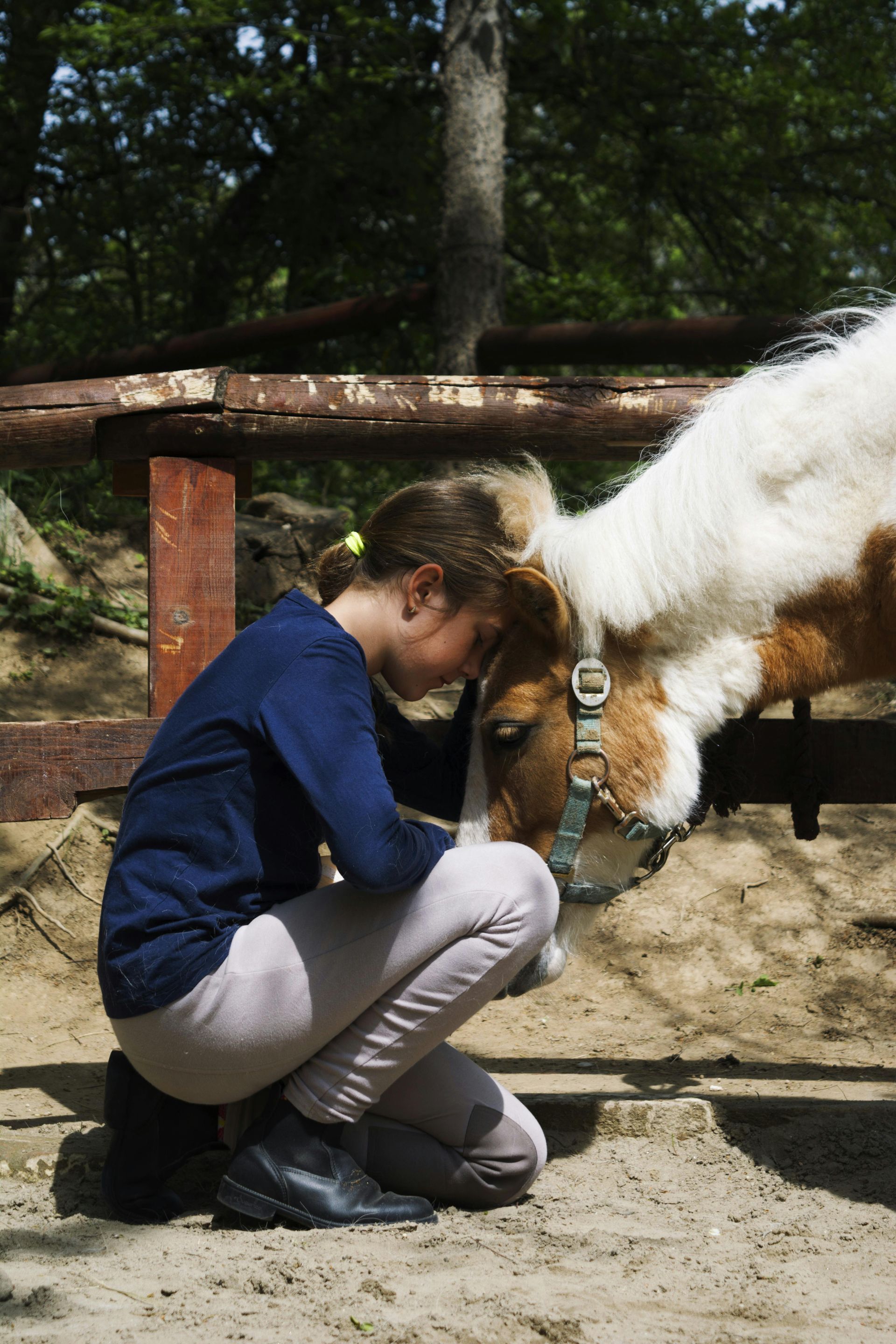
When a horse "co-regulates" with a person, it means that the horse's calm and steady nervous system helps to regulate the person's nervous system. This is a powerful mechanism for healing. Here's a breakdown of what that means and how it works: 1. The Nervous System and Regulation: Our nervous system is constantly scanning the environment for cues of safety or danger. When we feel threatened, our "fight-or-flight" response (sympathetic nervous system) kicks in, leading to increased heart rate, rapid breathing, and a state of hypervigilance. When we feel safe, our nervous system moves into a calmer, more relaxed state (parasympathetic nervous system). Many people, especially those who have experienced trauma, can get "stuck" in a dysregulated state of stress and anxiety. 2. Horses as Natural Co-Regulators: Horses are prey animals, which means their survival depends on being highly attuned to their environment and the emotional states of those around them. They are experts at reading non-verbal cues, like a person's body language, breathing patterns, and even heart rate variability. Because horses are so sensitive, they often react to a person's emotional state. If a person is anxious or stressed, the horse may become tense or skittish. However, a calm, present horse can also serve as a "touchstone" for a person's nervous system. 3. The Process of Co-Regulation: When a person in a dysregulated state interacts with a calm horse, their nervous system can begin to "attune" to the horse's. The horse's slow, steady heartbeat and rhythmic breathing can act as a signal of safety to the person's brain. This can help the person's nervous system to shift out of a stress response and into a more balanced state. This isn't just a psychological phenomenon; some studies suggest that the heart rhythms of humans and horses can actually synchronize. This process, known as heart coherence, can lead to a sense of centeredness, reduced stress, and emotional balance. 4. The Benefits for people: They can learn Self-Regulation: They get a felt sense of what it feels like to be calm and safe, which can help them learn to regulate their own emotions and nervous system. Process Trauma: The non-judgmental presence of a horse can provide a safe space for people to access and process difficult emotions that may be too overwhelming to address in traditional talk therapy. Develop Trust: For those with relational trauma, the consistent and honest feedback from a horse can help rebuild a sense of trust, first with an animal and then with people. Increase Self-Awareness: The horse's reactions serve as a mirror, giving immediate, honest feedback about a person's internal state and how it impacts those around them.
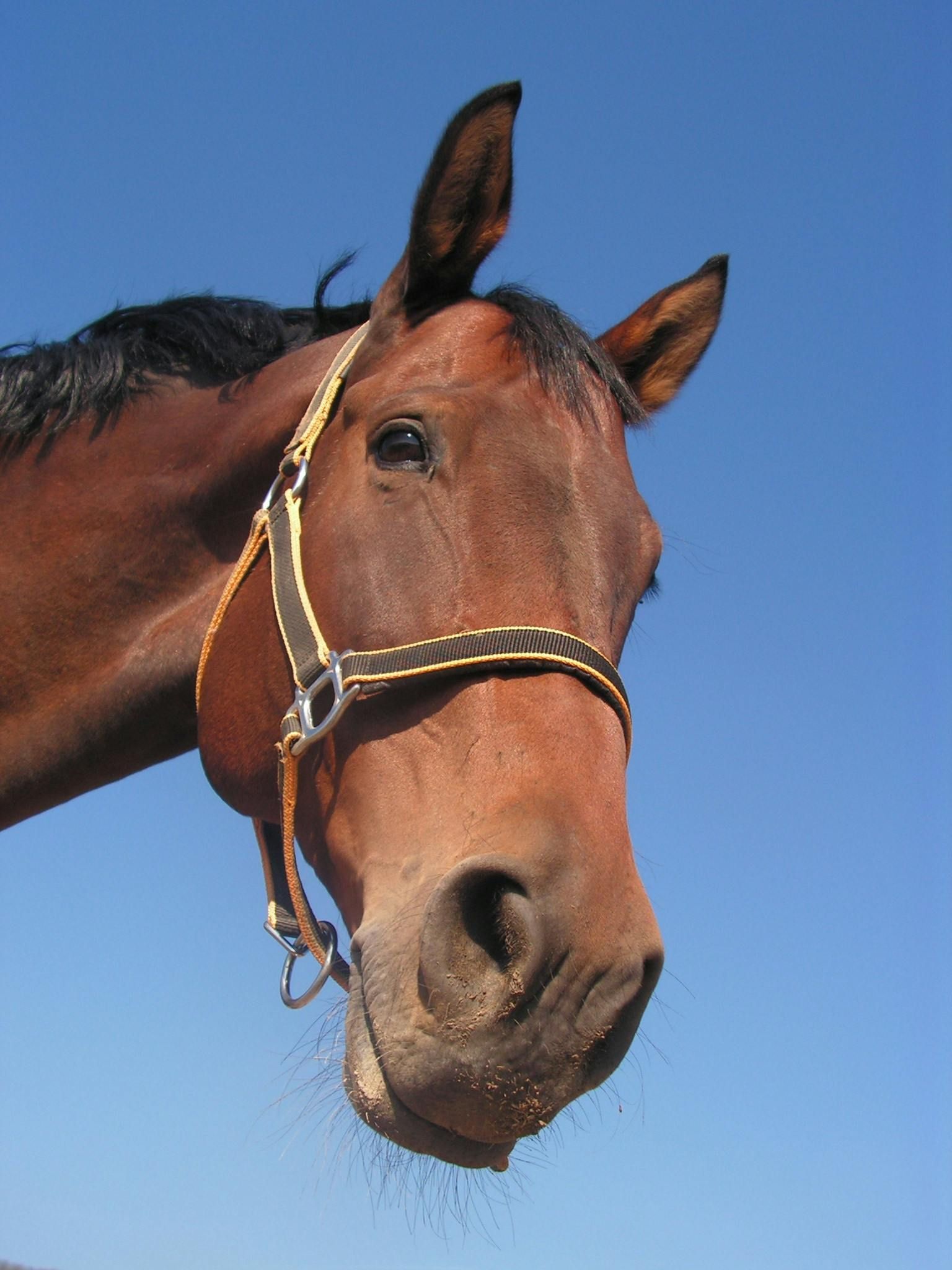
How Horses mirror our Inner World in Equine Assisted Coaching(EAC)
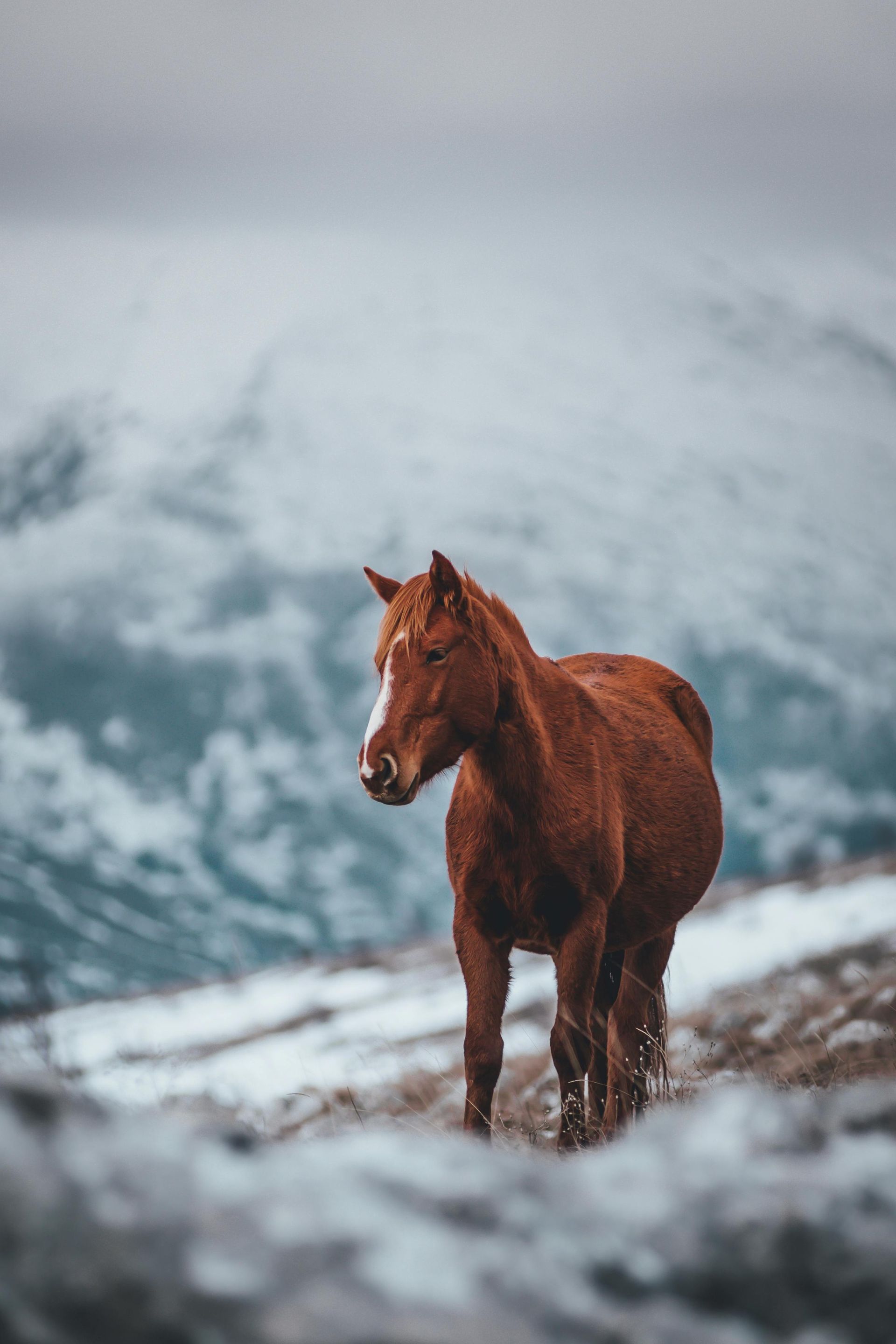
Providing Safety Through Symbolic Representation.
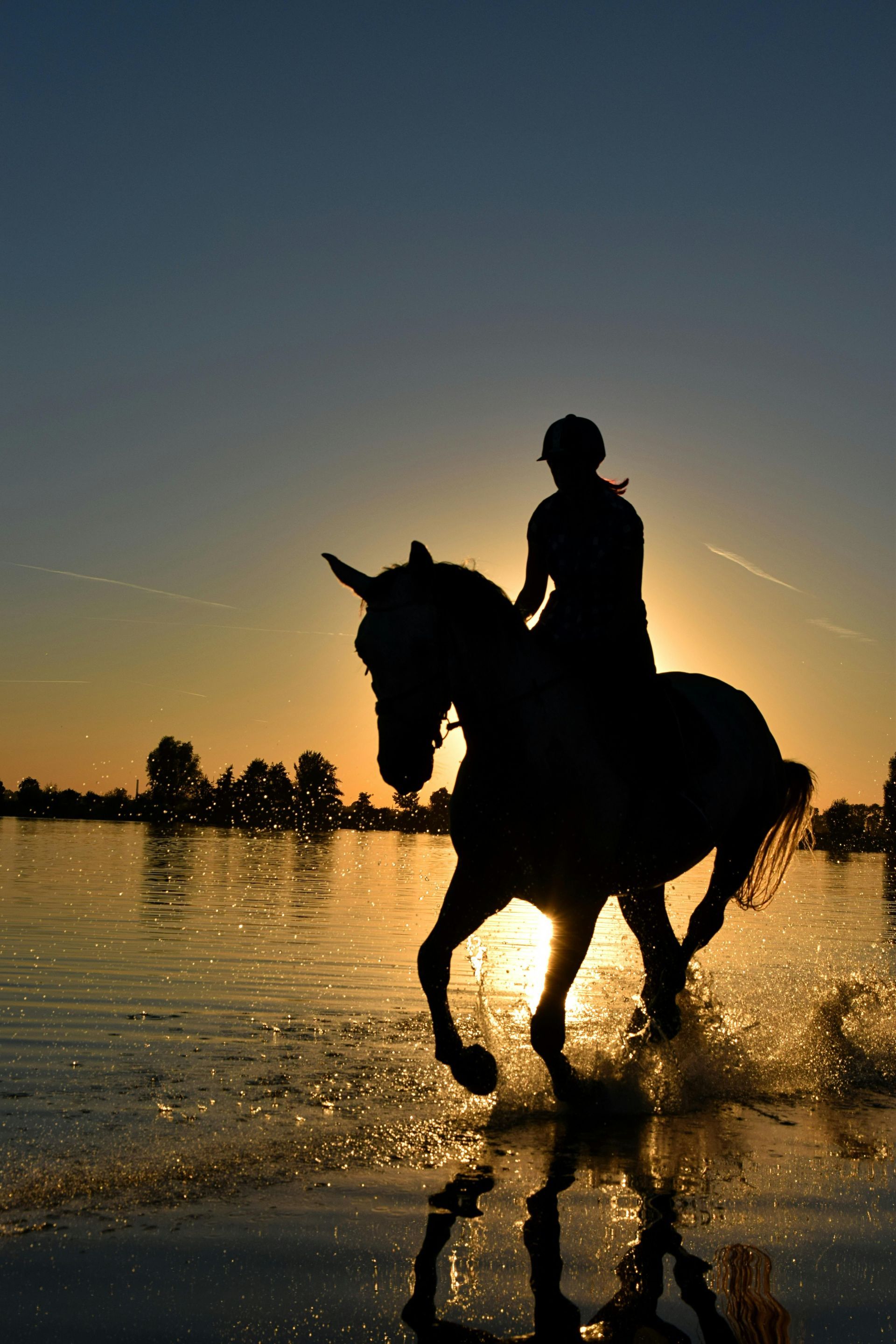
For centuries, labyrinths have offered a sacred space for reflection, prayer, and unearthing life's deepest answers. At the very core of a labyrinth lies the seat of your soul —that sacred place within your heart that embodies love, compassion, courage, truth, and joy. It's your "knowing self," a profound wellspring of instinct and inner wisdom. In our modern rush, it's all too easy to lose touch with this spiritual essence, to push aside our innate instincts instead of embracing their powerful guidance. Imagine pausing, taking a few deep breaths, and allowing your mind to reconnect with these deeper parts of yourself. A labyrinth walk is a beautiful form of meditation and mindfulness, gently guiding your busy mind away from distractions and allowing thoughts to emerge. Now, envision doing this with the calming, non-judgmental presence of a horse. We know from research that simply being near a horse can lower our blood pressure and soothe our nerves, creating an ideal environment for inner exploration. Let me share a recent experience that truly captured the magic of a horse-guided labyrinth walk. I set up a symbolic labyrinth in our arena using obstacles, with a hula hoop marking the center. My teen client, "Izzy" (a protective pseudonym), chose to ride the horse instead of leading it from the ground. I explained the labyrinth's purpose and encouraged her to voice whatever thoughts came to mind, no matter how trivial or spontaneous. As we stepped into the center, Izzy's first thoughts were wonderfully childlike: "Why doesn't peanut butter taste like peanuts, and why is water wet?" I affirmed her curiosity, highlighting the simple joy of asking such questions. We walked silently around the center, me beside her on the ground, her atop the horse. Upon exiting, she shared a vivid daydream: she was in a field with four wild horses . These weren't just any horses; they were powerful symbols of her own inner world —She said one was an angry horse, the other one sad, one happy, and one confused. She recounted seeing the angry horse kick the confused one. "Do you ever feel angry, and then confused by that anger?" I asked. She nodded. Then came a truly poignant moment. "Can you close your eyes and imagine haltering the angry horse?" "No," she admitted, "I can envision my favorite YouTuber haltering the horse, but not me." "Izzy," I gently prompted, "the anger is within you, and only you can halter that horse. Just as you can learn to guide a horse, you have the inherent ability to gain control over your own powerful emotions. " I encouraged her to close her eyes and visualize herself doing it. When she opened her eyes, a quiet smile graced her face. I reminded her that she could call upon this visualization of haltering those horses—those powerful emotional states—anytime she wished, a powerful tool to take with her. She responded that she felt this would be very useful, since she is very visual and likes to write stories. This journey with Izzy beautifully illustrates how the profound, grounding presence of a horse can help us navigate our inner landscapes, offering clarity and a path to self-empowerment through understanding and managing our own symbolic wild horses.
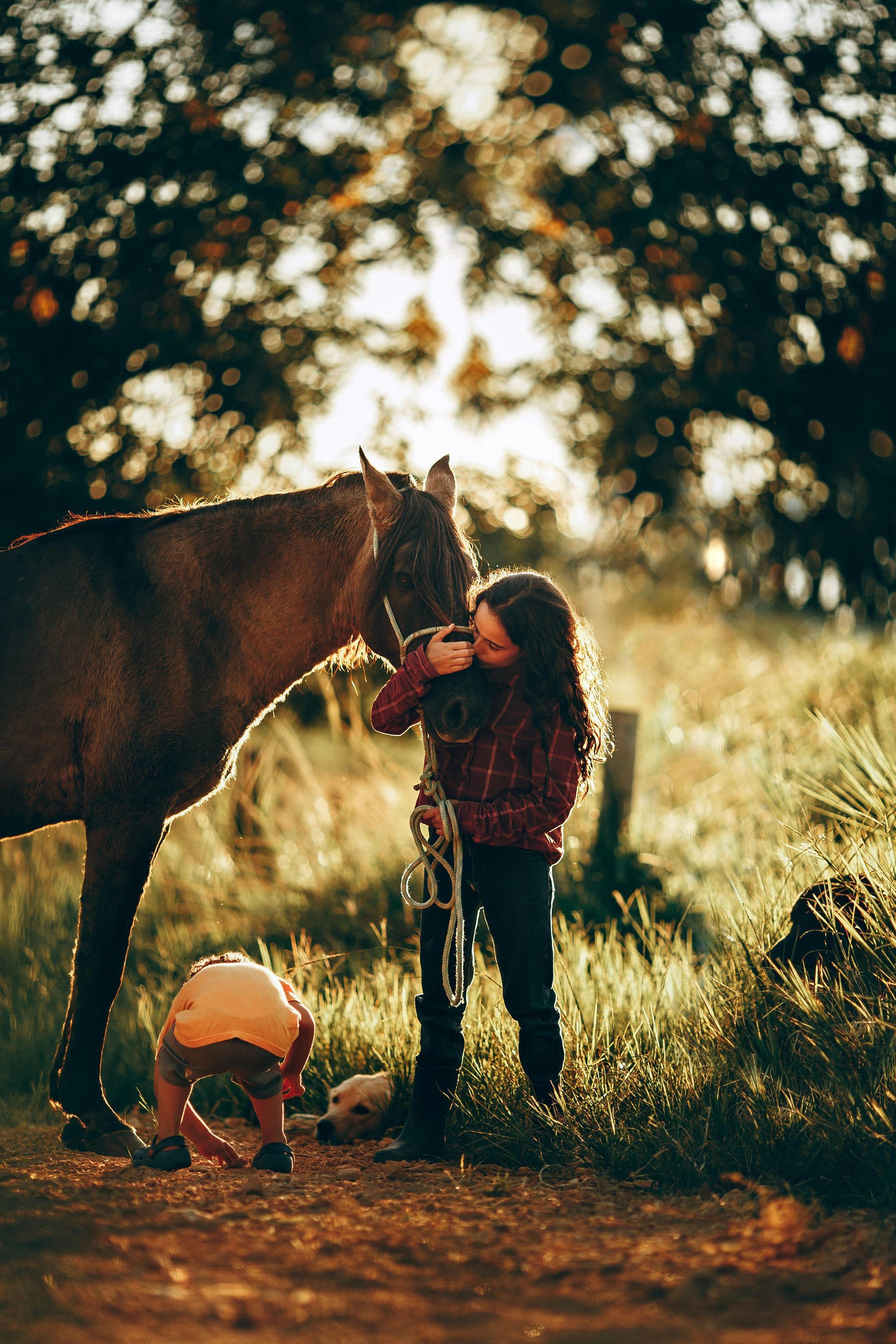
Lessons From the Herd
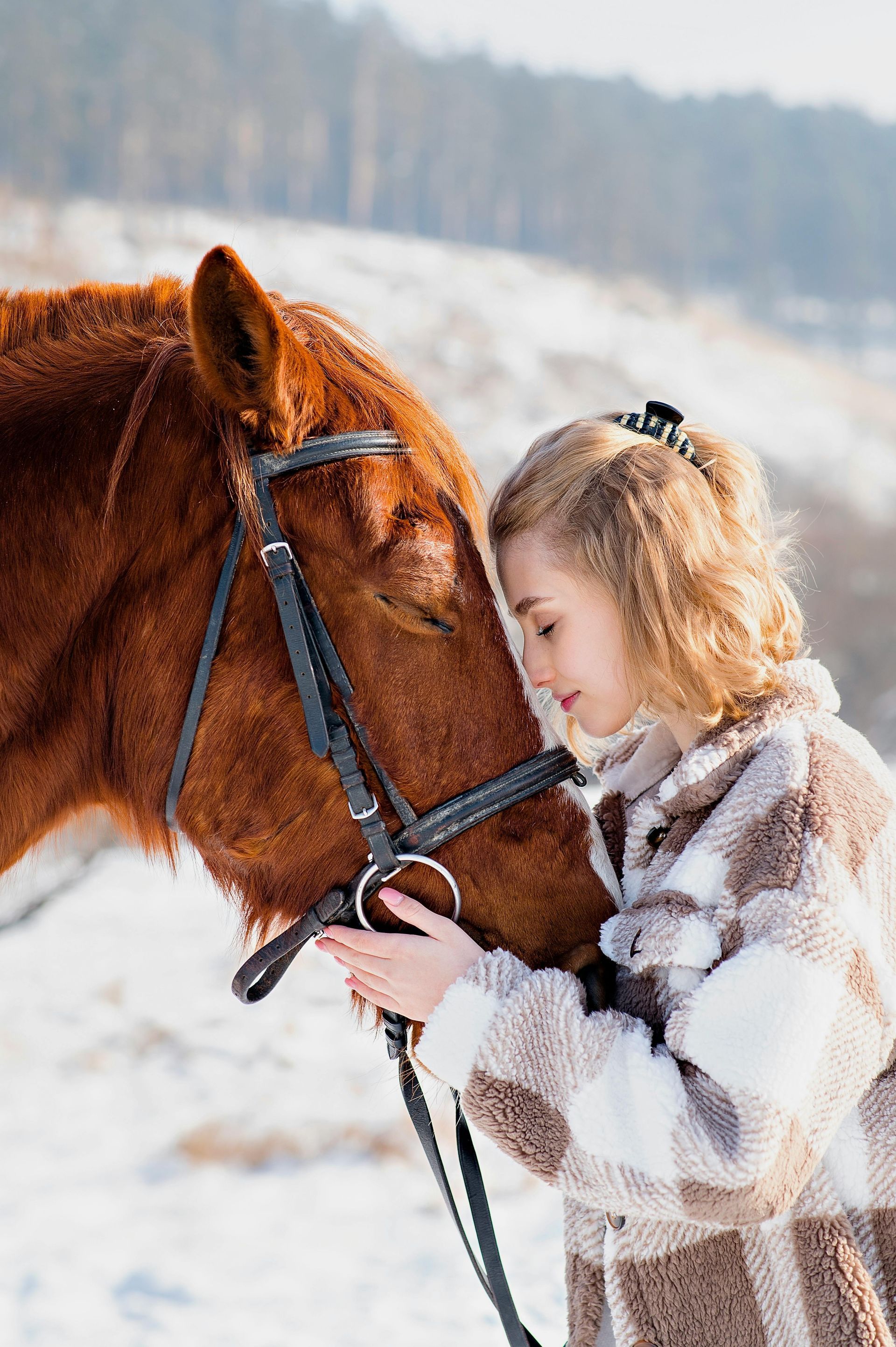
A Teen's Journey To Confidence
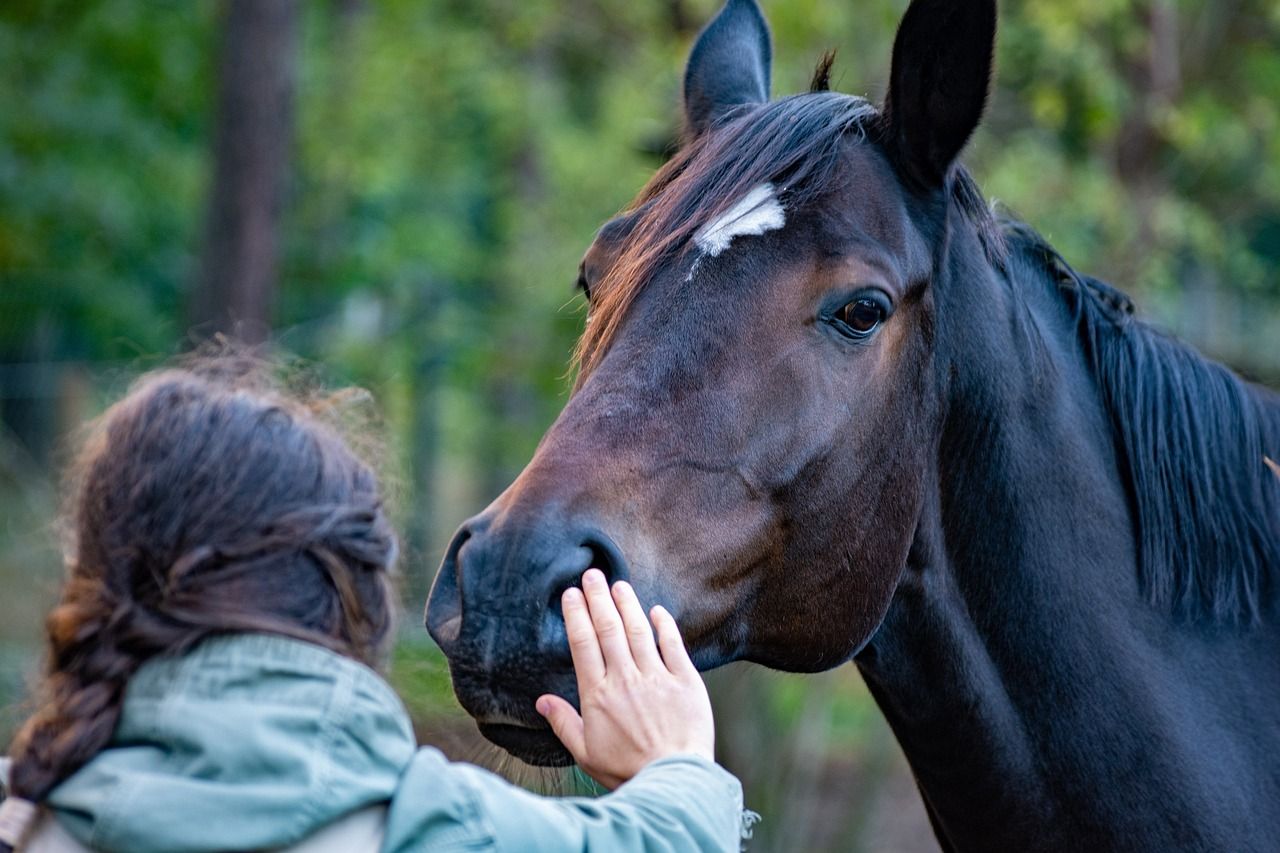
Why and How I Partner with Horses on the Path to Wholeness About fifteen years ago, I found myself at a crossroads, a point where life felt stagnant and ineffective. It was then that an unexpected opportunity arose: leading a Horse Trail Riding Program at a camp. This experience ignited an awareness within me – the healing power of horses. It wasn't just about my own personal relearning; I recognized the immense potential these magnificent animals held for helping others. This realization sparked a deep dive into the world of Equine Therapy, Equine Learning, and Equine Coaching. I immersed myself in books on trauma, somatic healing approaches, breath-work, grounding, and mindfulness, driven by a desire to understand how to bridge my background in Child Development with the transformative power of horses. This journey has culminated in a unique and effective approach, one that prioritizes relationship healing, emotional regulation, and the alleviation of anxiety and stress. The result of this dedication is a practice where I guide individuals in rediscovering their courageous, creative, and knowing selves. We humans possess an incredible capacity for resilience, for recovering from life's inevitable bumps and bruises. Yet, sometimes we lose our way, needing a compassionate guide to lead us back to wholeness. Experience is our most potent teacher, and horses serve as remarkable healers, assisting individuals on their journey of self-awareness and self-discovery. Scientific studies have demonstrated that simply being in the presence of horses can balance the brain and facilitate healing for both mind and body. When we cultivate a connection with ourselves, we naturally connect more deeply with others and the world around us. Investing time and energy in inner healing and self-improvement is an investment in our overall well-being. Early attachment issues and stress can manifest in various ways, including sensory integration challenges, attention deficits, and impulse control problems. Neuroscientists have discovered that stress and trauma can alter the brain's pathways. Fortunately, these pathways can be healed through reconnection. Partnering with a properly trained professional and bonding with a horse can significantly improve brain balance. Horses naturally regulate our breathing and blood pressure, offering a non-judgmental presence that encourages us to live in the present moment. By utilizing horse psychology and carefully observing the interactions between horse and participant, I help increase awareness of internal and external experiences. I act as a facilitator, observing and assisting the flow of energy and intention. The horse, in essence, mirrors the participant's inner state, allowing me to guide them towards an understanding of underlying currents that may be hidden from conscious awareness. I do not judge or provide solutions; rather, I create a safe space for participants to process their thoughts, beliefs, behaviors, and patterns. Purposeful activities, combined with techniques like breath-work, meditation, and relaxation, are designed to foster self-discovery and joy. Horses are sentient, relational beings, responding to our energy, intentions, emotions, and movements. We partner with these mystical animals to reintroduce love, vitality, and joy into our lives. Together, we explore, play, relate, reflect, and process, uncovering what holds us back and what we need to move forward as happier, healthier individuals. In our coaching sessions, you will partner with a horse to connect with your inner and outer communications, finding healing for your heart, mind, and soul. Some potential outcomes include learning to trust yourself and others, releasing negative reactions, developing courage and leadership, and finding creative solutions to challenges. You define your goals, set your course, and follow your own path, while I coach you alongside a horse who will be your guide on this transformative healing journey.
Horses, the Mirror to our Souls
Finding Your Calm